
Science
A high-quality science education provides the foundations for understanding the world through the specific disciplines of biology, chemistry and physics. Science has changed our lives and is vital to the world’s future prosperity, and all pupils should be taught essential aspects of the knowledge, methods, processes and uses of science. Through building up a body of key foundational knowledge and concepts, pupils should be encouraged to recognise the power of rational explanation and develop a sense of excitement and curiosity about natural phenomena. They should be encouraged to understand how science can be used to explain what is occurring, predict how things will behave, and analyse causes.
Science Curriculum
Please click on the picture link to find out more about how we teach our curriculum at St Thomas'.

Our Science Vision - Intent
At St Thomas’ Leesfield, we understand the need for all pupils to develop their Scientific ability as an essential component of all subjects and as a subject in its own right. We believe that a good understanding of scientific knowledge and conceptual understanding helps to support pupils’ work across the curriculum.
At St Thomas’ Leesfield, our vision is to give all children an inclusive Science curriculum which enables them to confidently explore and discover the world around them, in order to develop a deeper understanding of the world in which we live. The exciting, practical, hands on experiences which we give to them will encourage curiosity and questioning. In addition, promoting the experience of exploring and investigating scientific phenomena, in a range of contexts, will ensure a continually evolving knowledge and bank of core skills which will equip them for an ever-changing world as well as the knowledge and understanding to succeed in life.
Implementation of Our Vision
Our Science curriculum is inclusive and ensures that all pupils of all abilities can access and develop the range of skills needed to be successful scientists. By teaching science in short, intense two-week topic blocks, and by focusing on the key knowledge and skills outlined in our ‘Sticky Learning’, we aim to:
Prepare our children for life in an increasingly scientific and technological world today and in the future.
Help our children acquire a growing understanding of the nature, processes and methods of scientific ideas.
Help develop and extend our children’s scientific concept of their world.
Build on our children’s natural curiosity and developing a scientific approach to problems.
Encouraging open-mindedness, self-assessment, perseverance and developing the skills of investigations – including: observing, measuring, predicting, hypothesising, experimenting, communicating, interpreting, explaining and evaluating.
Develop the use of scientific language (subject-specific vocabulary to enrich pupils’ knowledge and understanding), recording and techniques.
Develop the use of computing in investigating and recording.
Make links between science and other subjects and considering this in everyday living.
Teach the three strands of science – Physics, Biology and Chemistry – in a cohesive, sequenced way from Year 1 to Year 6.
Build on and develop their scientific vocabulary. Through a whole-school approach of Word Aware, the vocabulary is graded on a scale of ‘Anchor’, ‘Goldilocks’ and ‘Step-up’ topic-specific words.
Opportunities for cross-curricular links are always used e.g. measurements and recording are linked in mathematic lessons as well as reading and writing opportunities across the curriculum including science.
Impact
The impact and measure of this is to ensure children not only acquire the appropriate age-related knowledge, skills and understanding linked to the science curriculum, but also skills which equip them to progress from their starting points, and within their everyday lives. We want the children to leave Leesfield with embedded knowledge (long-term memory) and skills that they can carry forward in their future learning and employment.

Our Science Learning Journey
Please select from the documents below.

|
Science Learning Journey | [pdf 377KB] |

|
Working Scientifically Progression of Skills
Please select the document below.

Key Assessment Criteria Science
|
|
Year 6 Key Assessment Criteria - Science Expected | [pdf 106KB] |
|
|
|
Year 5 Key Assessment Criteria - Science Expected | [pdf 109KB] |
|
|
|
Year 4 Key Assessment Criteria - Science Expected | [pdf 109KB] |
|
|
|
Year 3 Key Assessment Criteria - Science Expected | [pdf 110KB] |
|
|
|
Year 2 Key Assessment Criteria - Science Expected | [pdf 104KB] |
|
|
|
Year 1 Key Assessment Criteria - Science Expected | [pdf 103KB] |
|

The National Curriculum Science

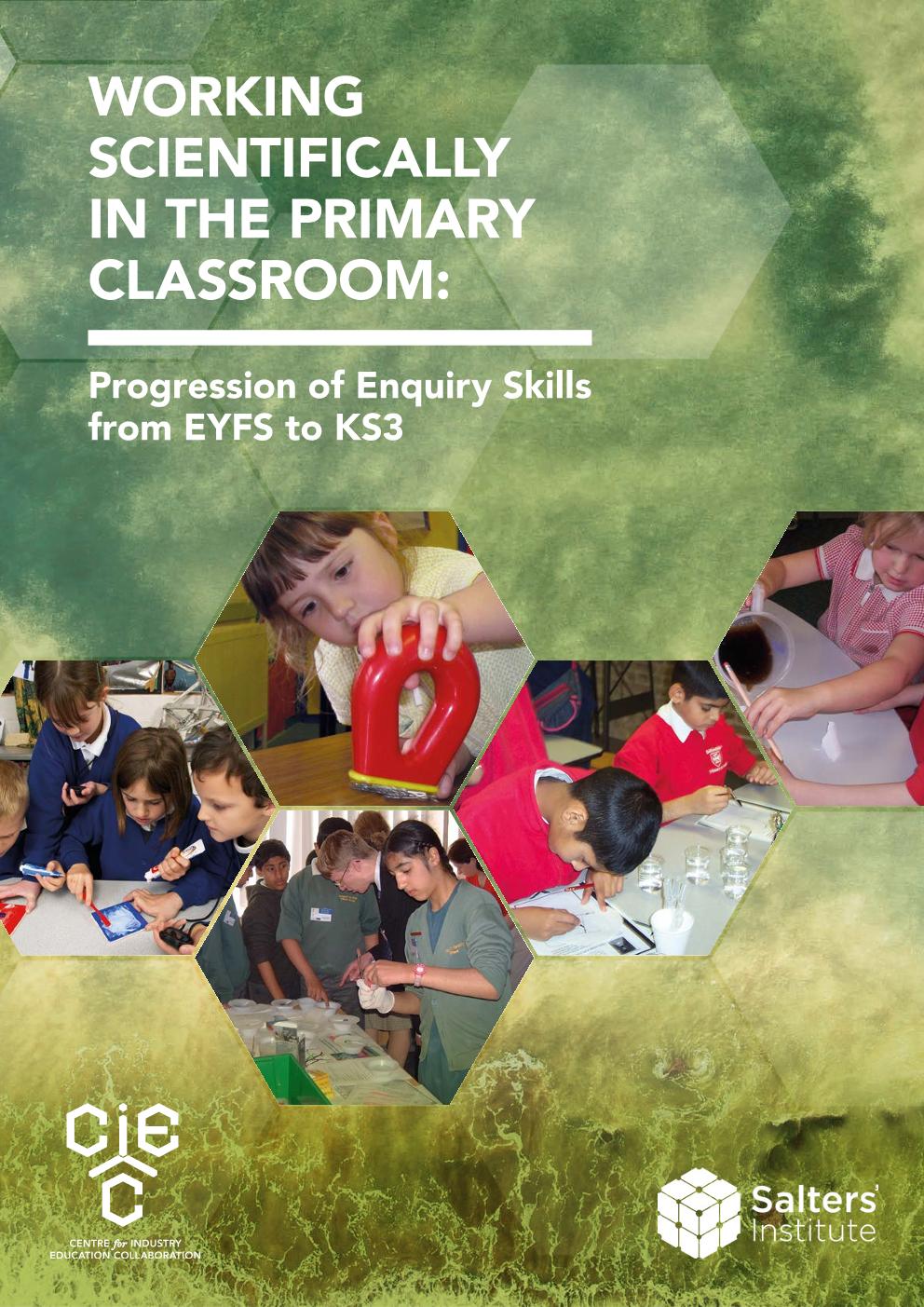
Working Scientifically in the Primary Classroom
This booklet has been produced to help teachers understand how to work scientifically within the primary science curriculum for England 1. Each page contains a summary of information intended to enable teachers to:
- plan science lessons during which children can show progress in their learning
- ensure continuity and progression of essential enquiry skills
- differentiate activities and add challenge for more able children
- make accurate assessments and facilitate high quality peer and self-assessments
We have used the findings of this report to inform the development of our Science Curriculum.
|
|
working-scientifically in primary classrooms | [pdf 1MB] |
|

Science Learning Resources
Please use the links below to access our learning resources.